Teleporter
alaindustrial:teleporter
Summary
The end of the long walk back. Park a station at your base, keep the remote in your pocket, and the mine is never far from home again. The station banks the power and pays for the jump itself; the remote only picks where.
A trip is exactly as reliable as your base is charged: a full station is good for 25–50 trips home.
How it works
- Place the station at your base and wire it up — it quietly banks up to 500,000 EU/FE.
- Put two blocks of glass on top of it — the station assembles into a capsule (see below). Without a capsule nobody can jump to the station.
- Shift-right-click it with the remote (the capsule's glass works too) — point saved. Name it, or leave it as "Teleporter 1".
- Right-click the remote anywhere — the list opens with the first point already selected.
- Hit Teleport — you're home, inside the capsule.
The remote works from either hand, and needs no clear sky to point at. Clicking stone, dirt or any block without its own action opens the list too — a mine has no sky, and a mine is exactly where you need it. Chests, crafting tables and machines still open as normal.
One remote remembers up to 16 stations. Binding the same one twice does nothing — no duplicates.
The capsule
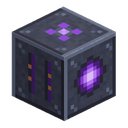
The station is the bottom cell of a 1×1×3 multiblock. Two blocks of any vanilla glass straight above it turn the three blocks into a capsule: a graphite base, a glass barrel with a side console, and a crown with a violet resonator. A jump lands the player inside, on the capsule floor, facing the door.
- Which glass works. Plain glass, all 16 stained colours and tinted glass. Glass from other mods does not: the capsule hands back exactly the glass it was built from, and it has nowhere to write down a block it does not know.
- Colour. The whole barrel takes the colour of the lower glass and looks like that glass; plain glass gives a neutral, cool barrel. The upper glass can be anything — you only see it again when the capsule comes apart.
- Order does not matter. Place the glass one block at a time, or put the glass up first and the station under it. The station notices the second glass a moment later.
- The door. Right-click the capsule's glass — from outside or from inside — and the three front panels of the barrel sink into the floor. After 3 seconds the door rises by itself, but never while someone is standing in the doorway. The same click closes an open door; a click while the panels are still moving is ignored. Right-clicking the base still opens the station's screen.
- Walking in. An open capsule is entered at a walk; no jump needed.
- Taking it apart. A cell broken with a pickaxe drops its glass; the cells left standing turn back into glass on the spot, and the station back into a cube. Break the station and both glass blocks stay where they are. Glass can neither be duplicated nor lost. By hand, like vanilla glass, a cell shatters without dropping anything.
- The upgrade shows on the capsule too. A station with a Random Jump Chip wears a teal stripe around the rim of its base.
- Older stations. A station placed before capsules existed keeps its EU/FE, its owner and every remote bound to it — but a jump to it is refused with "No capsule on the station" until two glass blocks go on top.
The jump
Five seconds of wind-up: a purple vortex tightens around you — bystanders see it, and so do you in third person — a hum rises, and in the last second the screen fades almost to black. Then it snaps clear: you're there.
What cancels it: stepping more than 2 blocks, taking damage, dying, logging out. A cancelled jump costs nothing — energy is only spent once you land. You cannot teleport out of a fight; you can absolutely finish mining and leave. After a jump, one minute of cooldown.
You cannot jump while riding a horse, boat or minecart — dismount first. The teleporter moves the player and nobody else — it never drags anything along.
What happens to a pet after that is vanilla's business, not the mod's. A tamed pet that is sitting, leashed or riding something stays where it is. A free-standing wolf or cat, on the other hand, will catch up on its own: a vanilla pet teleports to its owner once it is more than 12 blocks away. That only works while the pet is in a loaded chunk — after a jump halfway across the map it simply stays home.
What it costs
The target station pays, not the remote. The price grows with distance and with how much you are hauling: a full inventory doubles the bill.
cost = (5000 + distance × 5) × weight, weight = 1.0 (empty) … 2.0 (full inventory)| Jump | Cost | Trips on a full station |
|---|---|---|
| 100 blocks, travelling light | 5,500 EU/FE | ~90 |
| 1,000 blocks, light | 10,000 EU/FE | 50 |
| 1,000 blocks, full inventory | 20,000 EU/FE | 25 |
| 10,000 blocks, full inventory | 110,000 EU/FE | 4 |
It is the hungriest block in the mod — for comparison, the pump spends 1,000 EU/FE per bucket. An everyday trip home, though, barely dents the buffer.
64 dirt and 64 diamonds weigh the same. What counts is how full your inventory is, not what is in it — simpler to grasp than a weight table for every item.
The random jump
A station can be upgraded — and then it can throw you at a random point in the world, with no second station at the far end at all.
Fitting the upgrade. Craft a Random Jump Chip and shift-right-click a placed station. The chip is consumed and the station keeps the module for good. A plain right-click will not do — that opens the station's screen; the sneak is the same one the remote uses to bind it.
The module survives the block being broken (it rides the item along with the stored EU/FE and the privacy flag), but the chip cannot be taken back out: one chip, one station.
An upgraded station can be told apart at a glance. Teal brackets light up in the corners of its faces — the only teal on a violet-and-slate block, so there is nothing to confuse it with. The mark appears the moment the chip goes in and travels with the block. You never need to open a screen to find out whether a station is upgraded.
Making the jump. Select a station in the remote's list and press Random. The station you selected is the one that pays — and the one that must carry the chip.
| Price | 50 000 EU/FE, flat — shown in the tooltip before you press |
| Where to | a random point in a ring 500…5000 blocks out |
| Where it works | the Overworld only |
| Warmup / cooldown | the same 5 s and 60 s as an ordinary jump |
Why the price is flat. An ordinary jump is priced by distance — but here the distance is unknown until the dice have been thrown. A flat price is the only one that can be shown to the player before they commit. Inventory weight is left out for the same reason.
Why the Overworld only. The search leans on surface height. In the Nether that runs into the bedrock ceiling, and in the End there is void between the islands — "surface" means nothing there, and refusing honestly beats guessing and dropping someone into rock or into nothing.
The landing is safe or the jump does not happen. The mod tries up to 8 spots: no lava, no water, no cactus, not inside a block, two clear blocks overhead. Nothing found means the jump is cancelled for free and you can simply press again. The spot is picked the moment you press (so a refusal is immediate rather than five seconds late) and measured again at the end of the warmup — if it went bad in those five seconds the jump is cancelled rather than carried out blind.
Random is dearer than a targeted jump of the same length (5000 blocks would cost ~30 000 with an empty pack). That is what you pay for needing nothing built at the far end.
Privacy
A stolen remote is useless — it binds to whoever first uses it, so a thief cannot follow it to your base.
Stations are private by default: only the owner may jump to one. You can open it to everyone with the switch on its screen, but only after opening the padlock beside it — two deliberate clicks instead of one stray one. The lock closes itself again after each change.
The same padlock guards the remote's Delete button: removing a point erases the only record of where home was.
Interface
Station screen: charge bar, owner name, and a Private/Public switch behind a padlock. A public station reads "Teleporter — <owner> (public)" in its title.
Remote screen — two tabs. Map: a radar of your bound stations around you (a dot's colour is its readiness: green; amber — no capsule; red — no power; grey — another dimension or someone else's private station), a card for the picked station with its price, charge and capsule, a "will it take you" line, and the Teleport and Random buttons. Stations: the same list with lamps, renaming and Delete (behind the padlock). The picked station's state in a word in the header. If a jump will not start — station flat, still cooling down, station gone — the reason appears inside the screen in full, never cut off.
Energy
| Field | Value |
|---|---|
| Role | consumer with a buffer (accepts EU/FE only) |
| Buffer (EU/FE) | 500,000 — 25× the battery box |
| Max input (EU/FE/tick) | 512 (HV) |
| Max output (EU/FE/tick) | n/a (never gives EU/FE back) |
| EU/FE/tick | 0 while idle; one lump sum per jump |
The station is an ordinary HV consumer — the network finds it by itself. Idle, it costs nothing.
It charges in minutes, not seconds. There is no HV infrastructure in the mod yet: a copper cable only carries 12 EU/FE/tick (its ceiling is the segment buffer, not the tier voltage), so a full buffer is ~35 minutes over copper cable, or ~26 minutes from a single geothermal generator. That is the intent — the teleporter is slow-charging endgame gear.
Block properties
An unassembled station is a full 16³ cube, broken with a pickaxe. Assembled, it is the capsule's base: its outline stops at 10/16, its floor at 9/16, and it hides nothing of its neighbours. It keeps its privacy flag and stored EU/FE when broken, but forgets its owner — replace the block and it is yours. The front face (the door side) is inert; the other five accept EU/FE.
The capsule's glass cells have no item and are not in the creative tab: the station places them. Hardness 1.0, glass sound, pistons cannot move them, light passes through.
Sound
Jumps have three sounds of their own. The sound belongs to the player, not the station: it plays where the player stands, and the traveller and anyone within 16 blocks can hear it.
- the charge-up: one rising clip about five seconds long, covering the whole warm-up, with no repeats.
- the arrival at the destination.
- a broken charge: moving, being hit, dying or logging out during the warm-up, or a refusal at the finish. A charge-up that is still playing is cut off at once.
A random jump plays the same set. Binding a point with a remote or a chip makes the vanilla end portal frame sound, and the capsule dome uses the reactor airlock sounds.
Recipes
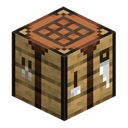
The station is a real endgame recipe:
| electronic circuit | eye of ender | electronic circuit |
| copper coil | block of diamond | copper coil |
| uranium ingot | uranium ingot | uranium ingot |
The remote is cheaper: an ender pearl, an electronic circuit and 3 tempered iron. A station is useless without one, and a remote leads nowhere without a station.
Progression
- Tier: HV, part of the "Beyond MV" cluster (ROADMAP).
- The gate is uranium and an eye of ender rather than an HV transformer: no such item exists in the mod, and a recipe cannot point at something that is not there.
- Grows into: cross-dimension jumps, whitelist privacy, a chunk-loading station mode.
What charges it
The station is a fund, not a machine: the network feeds working machines first and tops the fund up from what is left. That gives three ways to charge it, at three different speeds.
| How | Speed | Stops when |
|---|---|---|
| Generator over cable | whatever the generator makes | never, while the generator runs |
| Storage over cable | 12 EU/FE/tick | the donor is down to half its capacity |
| Storage placed flush (no cable) | up to 32 EU/FE/tick | the donor is empty |
Over a cable a store only gives away its surplus — whatever it holds above half. That is deliberate: the station's buffer is 500 000 EU/FE against a Battery Box's 20 000, and without the floor a single station would drain the whole base bank and leave the machines dark. To fill it outright, put a store flush against it: the direct path has neither a rate limit nor a reserve, and it is the player's explicit way of saying "take everything".
Machines always come first: while anything is working on the same network, the station charges only from the remainder. And while two Battery Boxes on the same line are levelling with each other, the station gets nothing from them — neither their transfer nor the feed in the table above; the generators' surplus (what they make beyond the machines' needs) still reaches it meanwhile. Once the boxes are level, they feed it again as the table above says.
And when the generators fall short of the machines and a Battery Box backs them up, for as long as that goes on the station takes only the generators' surplus — what they make beyond the machines' needs; the box's reserve goes to the machines.
Related
- Battery box — what charges the station.
- Electronic circuit — a crafting component.
- Pump — for comparison on EU/FE appetite.
Crafting
Shaped Crafting




▶
Teleporter