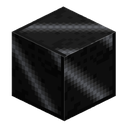

Ceramic Plate
alaindustrial:ceramic_plate
Summary
The ceramic plate is the working form of the material and the second-to-last rung. It comes out of a carbon briquette, and how many plates one briquette gives depends on how it is split: quench press four, hand quench in water three, dry break at a workbench two.
Mini-example: a briquette thrown into water under a piston gives four plates — exactly one block of carbon ceramic. The same briquette broken at a workbench gives two, and the block costs twice the coal.
The slag is already inside the plate — it joins a rung earlier, when the briquette is fired, and that is where sorting your junk in the Recycler pays off.
Recipes
1 briquette → 4 plates — the quench press (water + piston + 2 redstone dust). 1 briquette → 3 plates — right-click a water source with the briquette. 4 plates → 1 block (workbench, 2×2 square) and back again 1 block → 4 plates.
The plate/block cycle is strictly reversible and lossless, like a vanilla ingot and its block: the block is a dense storage form plus a building material, not a dead end.
Progression
One plate costs 16 coal — a quarter of the stack that went into the briquette. That makes it cheap enough to go into recipes by the handful and dear enough not to be burnt for nothing.
The plate has no consumers of its own yet other than the block. A ceramic casing and reactor-room lining are the next step; if that drags on, it is more honest to drop the plate than to leave it a dead end.
Related
Carbon briquette — what the plate is cut from. Carbon ceramic — the block made of four plates. Recycler — the source of the slag. Alloy smelter — the machine that fires it.
Crafting
Shapeless Crafting

▶
×4Ceramic Plate
Used in
Shaped Crafting
▶
Carbon Ceramic