

Recycler
alaindustrial:recycler
Summary
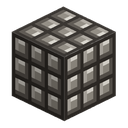
The Recycler is an LV machine that eats junk. Any junk: stone, dirt, spare tools, planks, the leftovers of a chest clear-out — it does not check what you gave it and it does not ask for confirmation. In return it builds up a batch and, once the batch is full, casts a slag briquette.
Its one rule: the grade of the briquette is decided by how varied the batch was, not by how big it was. A stack of cobblestone and a stack of dirt weigh the same to a mass counter, so a mass-only recycler would reward hauling the same rubbish forever. Here it pays to mix: mineral waste, scrap metal and burnables in roughly equal parts cast rich slag — the grade the later matter chain will want.
Mini-example: feed it 16 cobblestone in a row and the batch fills up and drops poor slag, good for a building block and for fuel. Mix in some stone, a worn pickaxe and a couple of planks and the same batch casts rich slag instead.
⚠️ The Recycler destroys everything it is given, valuables included. There is no filter, and that is deliberate: a mistake in your pipe layout costs you a diamond set. It is the machine's rule, not a bug.
Energy
| What | Value |
|---|---|
| Internal buffer | 800 EU/FE |
| Max input | 32 EU/FE/t (LV) |
| Consumption | 8 EU/FE/t while working |
Energy comes in on the five working faces; the front face is inert — cables do not connect there.
Processing
The machine grinds one item per operation and adds its mass to the batch. A briquette comes out when the batch reaches the threshold.
| What | Value |
|---|---|
| Operation length | 40 ticks (2 s) base, scaled by the blade grade |
| Batch threshold | 64 mass units |
| Cost per batch | depends on mass: a batch of 16 blocks costs 5120 EU/FE with iron blades, 3584 tempered, 2560 diamond |
| Auto-output | none |
Item mass depends on what it is:
| What you put in | Mass |
|---|---|
| A tool, weapon or piece of armour — a whole object | 8 |
| A block | 4 |
| An ordinary item | 2 |
| Something the machine does not recognise | 1 |
The fraction is decided by a chain: material tags first, then what the block sounds like, and only then "other". "Other" counts toward mass but never toward variety — otherwise a stack of unknown junk would fake a mix and hand you the best grade for free.
| Batch composition | What comes out |
|---|---|
| one fraction takes 80 % or more | Poor Slag |
| two fractions in workable proportion | Slag |
| all three, none of them over half | Rich Slag |
Inventory
| Slot | Accepts | Count |
|---|---|---|
| Input | anything except blades | 64 |
| Blades | # | 1 |
| Briquettes | output only | 64 |
| Ash bin | output only | 64 |
Without blades the machine does not run. Blades wear down — one item of waste is one point of wear — and the grade sets both the speed and the amount of ash:
| Blades | Speed | Scrap metal | Ash per batch | Lifetime |
|---|---|---|---|---|
| Iron | base | twice as slow | 4 | 256 |
| Tempered | ×1.4 | no penalty | 3 | 768 |
| Diamond | ×2 | no penalty | 2 | 2048 |
The ash bin has to be emptied. Three quarters full and the machine runs half again as slow; full and it stops and says so. A hopper underneath takes the ash away on its own, so the upkeep can be automated.
Interface
The screen shows the batch gauge with a reading (24 / 64), an operation progress bar below it, a "Will cast: …" line naming the grade the batch would produce right now, and three labelled fraction bars — Mineral / Metal / Burnable. The batch gauge's tooltip states the rule out loud, a fraction's tooltip gives its share as a percentage, and the progress bar's gives the percentage done. The empty blade slot shows a ghost of the three grades so it is obvious what goes there.
The state is readable from outside, too. The front panel lights one lamp per fraction in the batch: one lamp means a single kind of junk is going in and the cast will be ballast, three means the mix is right. The top port glows while the machine grinds. Walking past a farm tells you what it is being fed without opening anything.
The status line names the reason for a stop: no blades, ash bin full, briquette slot full, no energy.
Block Properties
| Field | Value |
|---|---|
| Hardness | 3.0 |
| Blast resistance | 6.0 |
| Tool | pickaxe |
| Sound | metal |
Recipes
| What | How |
|---|---|
| Recycler | machine casing + electronic circuit + 2 iron blades + 4 iron ingots |
| Iron blades | 4 iron ingots around a basic bearing, an iron gear below |
| Tempered blades | smelt the iron blades in any furnace — vanilla, iron or electric |
| Diamond blades | 4 diamonds around the tempered blades, a reinforced bearing below |
| Block of Slag | 9 poor slag (and back again) |
| Gray dye | 2 ash |
Progression
The Recycler is a late LV machine: it needs a casing and a circuit, so it shows up once you already have a macerator and a first power grid. Its point is to give junk a price and to prepare the feed for matter production later — rich slag accumulates for the matter fabricator, which is a separate piece of work.
Related
Macerator — the neighbouring idea: there ore becomes more valuable, here junk stops being junk. Fermenter — the boundary between the two: all organics go there, the Recycler takes what the Fermenter will not. Generator — slag's first sink: briquettes burn. Incubator — the source of irradiated slag, which the Recycler will accept on a branch of its own later.
Crafting
Shaped Crafting



▶
Recycler